
Epoxy gives you a seamless, easy-to-clean floor that bonds to concrete, and it works best when the slab is sound and the preparation is done properly. The downsides are real, and almost all of them trace back to preparation, moisture and the finish you pick. Here are both sides, from the floors we grind, coat and seal across Palm Beach County and the South Florida coast.
What Epoxy Does Well
An epoxy system bonds to the concrete and forms one continuous surface, so there are no seams or grout lines to collect dirt. You sweep it and mop it, and spills wipe up instead of soaking in. Oil, salt and household chemicals sit on top of the coating instead of in the slab.
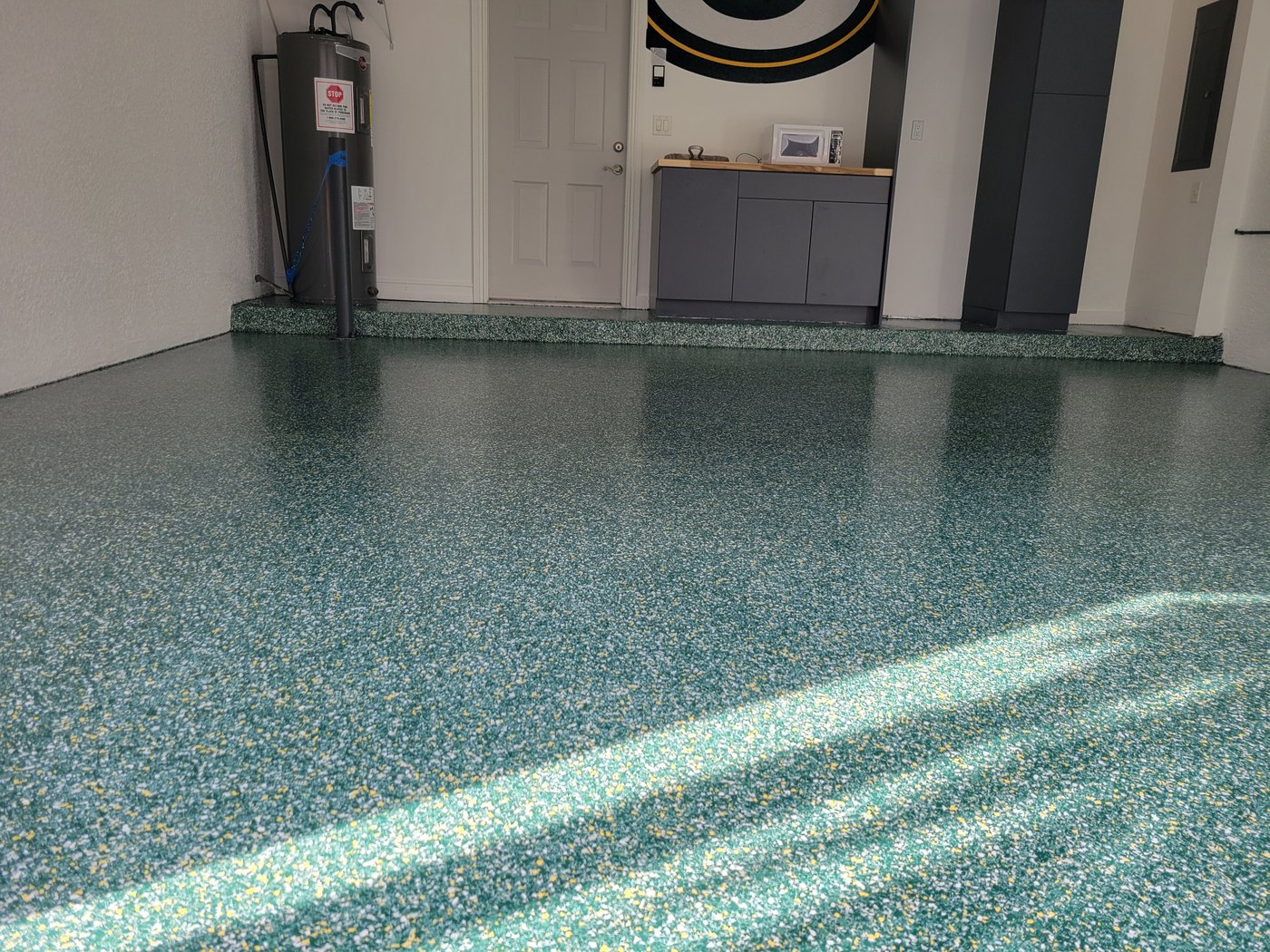
It also looks better than most people expect. Flake blends hide dirt and tire marks, solid colors give a clean, uniform floor, and metallic finishes add depth and movement. You can see every flake blend we install or browse the showroom before you decide.

Where Epoxy Falls Short
It Depends on the Preparation
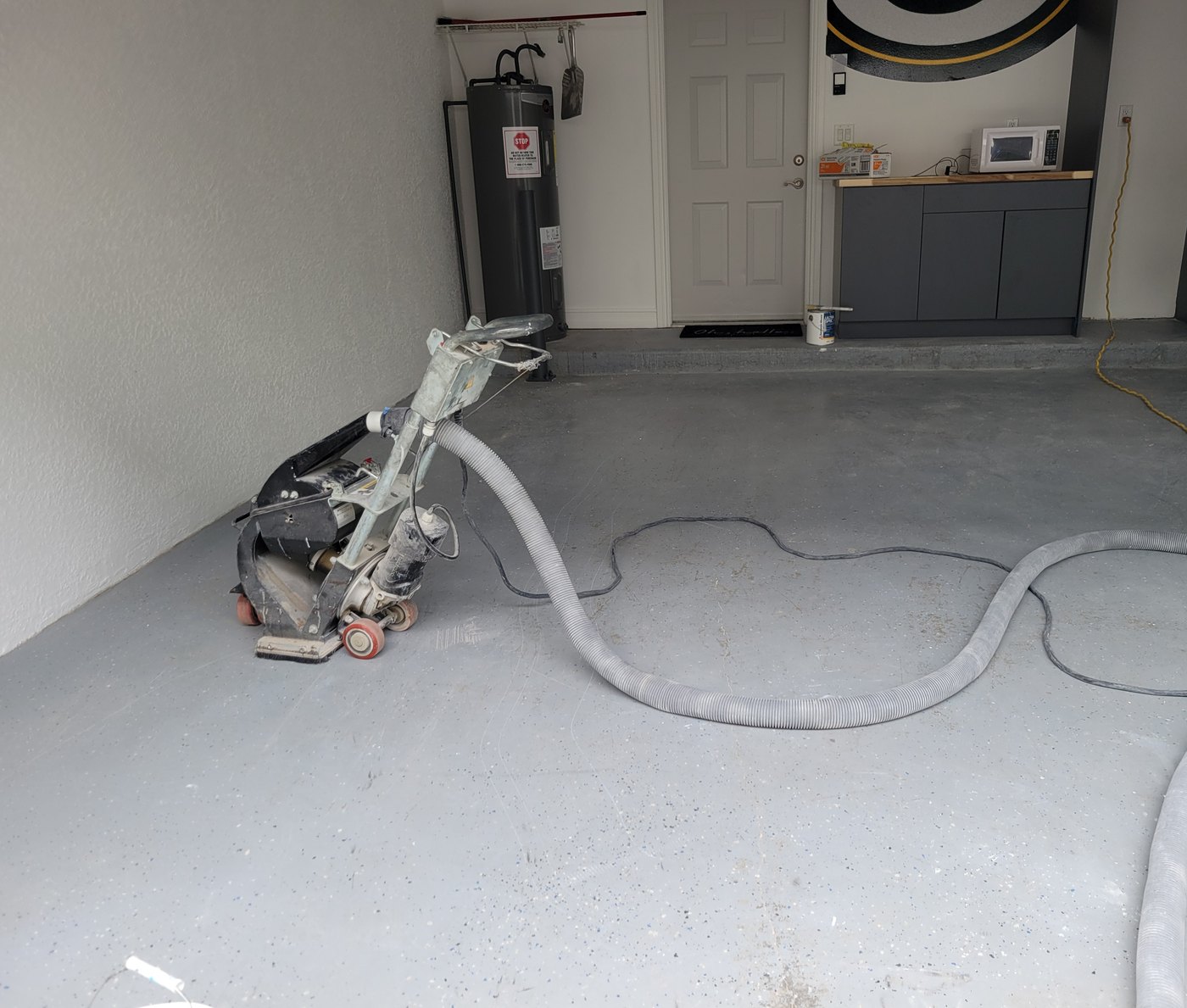
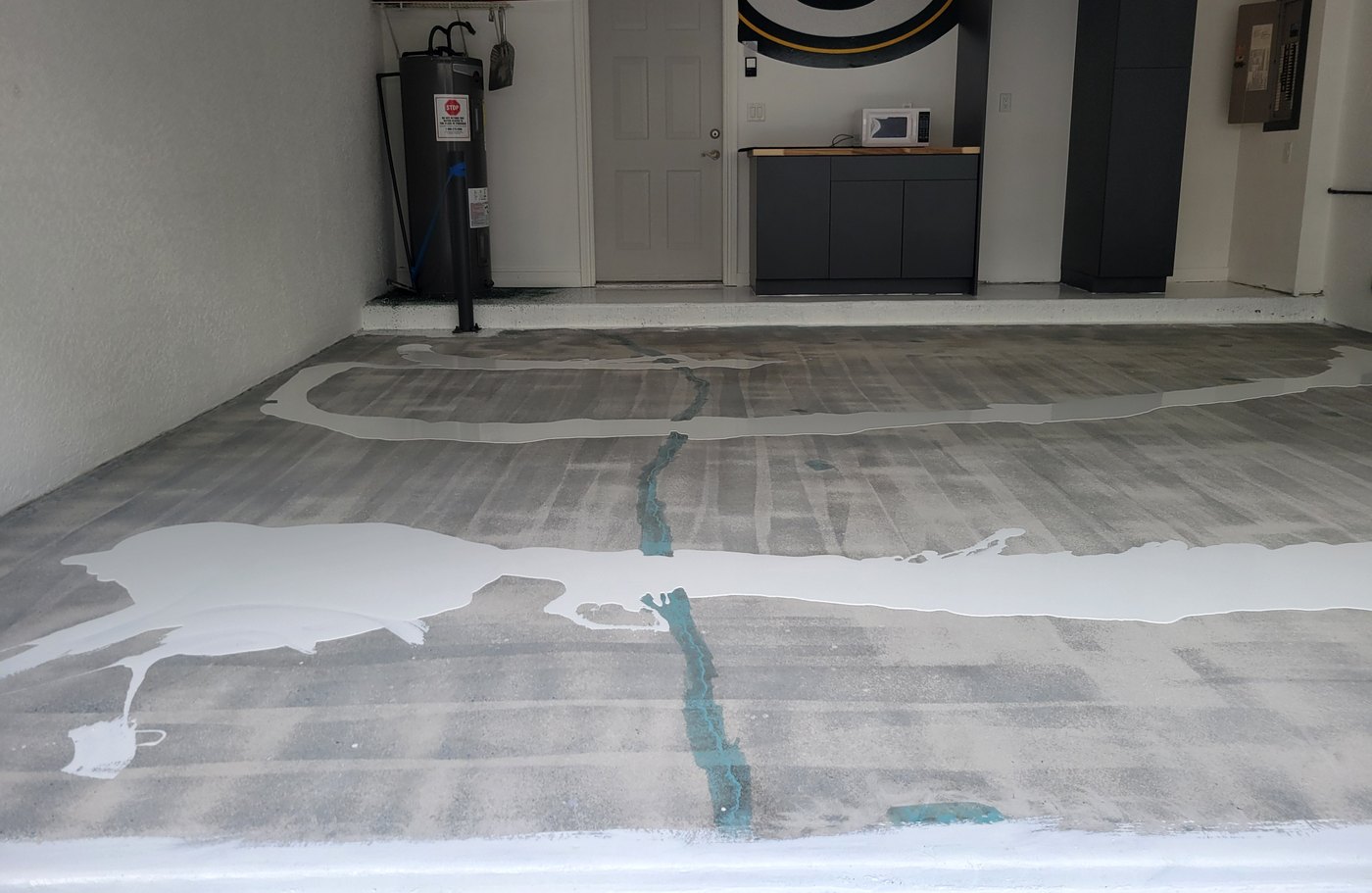
A coating is only as good as the concrete under it. We grind the surface so the system can bond, and we repair cracks before anything goes down. A floor that skips that work is the one that peels later, and a peeling coating has to be removed before a new system can be installed, so it pays to get this step right the first time.
Moisture in the Slab Can Cause Problems
Florida slabs hold moisture, and moisture pushing up from below can lift a coating from the concrete. It is one of the most common reasons a floor fails, and the condition of the slab helps decide which system is the right choice. Your installer will address any concerns you have about moisture during your free estimate.
A Smooth Finish Can Be Slippery When Wet
A glossy, smooth coating gets slick when it is wet. Flake adds texture underfoot, and quartz and anti-slip options add traction where you need it, such as near a garage door or a wash area.
Plain Epoxy Is Not the Best Choice in Direct Sun
Garages that take direct Florida sun do better with polyaspartic on top. Epoxy builds the body of the floor and polyaspartic protects the surface, which is why many of our garage floors use both.
It Costs More Up Front Than Paint or Mats
A professionally installed system costs more than paint, tiles or mats, because the grinding, repair and layered coating take real work. The price depends on the size of the floor, the condition of the concrete and the finish you choose. Our cost calculator gives starting prices, and a free estimate gives you a number for your floor.
It Does Not Fix a Slab That Is Still Moving
Cracks get filled and coated, but a slab that is shifting or heaving needs attention first. We look at the concrete before we recommend a system, and we tell you if the floor needs something done before it can be coated.
Is Epoxy Right for Your Floor?
Epoxy suits a sound slab where you want a floor that is easy to keep clean and good to look at, from a home garage to a commercial space. If your floor is old, stained or peeling, refinishing starts with removing what is there. If you are comparing it with tiles, mats or paint, we put them side by side in Garage Floor Tiles vs Epoxy, Paint and Mats.
Is epoxy flooring worth it?
For a sound concrete floor, yes. A professionally installed system gives you a seamless surface that is easy to clean and protects the concrete underneath. The result depends on the preparation, so it is worth choosing an installer who grinds and repairs the slab first.
Does epoxy flooring peel?
It can when the preparation is skipped or moisture is coming up through the slab. A peeling coating has to be removed before a new system is installed. Refinishing starts with that step.
Is an epoxy floor slippery?
A smooth, glossy coating can be slippery when wet. Flake adds texture, and quartz and anti-slip options add more traction where you need it.
Is epoxy or polyaspartic better in Florida?
They do different jobs. Epoxy builds the body of the floor and polyaspartic protects the surface, and it is chosen for garages because it stands up to Florida sun. Many floors use both. See polyaspartic garage floor coating for how it works.
Can epoxy go over old paint or a peeling coating?
Old paint and failing coatings are ground off before the new system goes down, so the new floor bonds to prepared concrete.